
When someone tells you they own a sculpture from the 1st century BC, you don’t immediately believe them. I certainly didn’t.
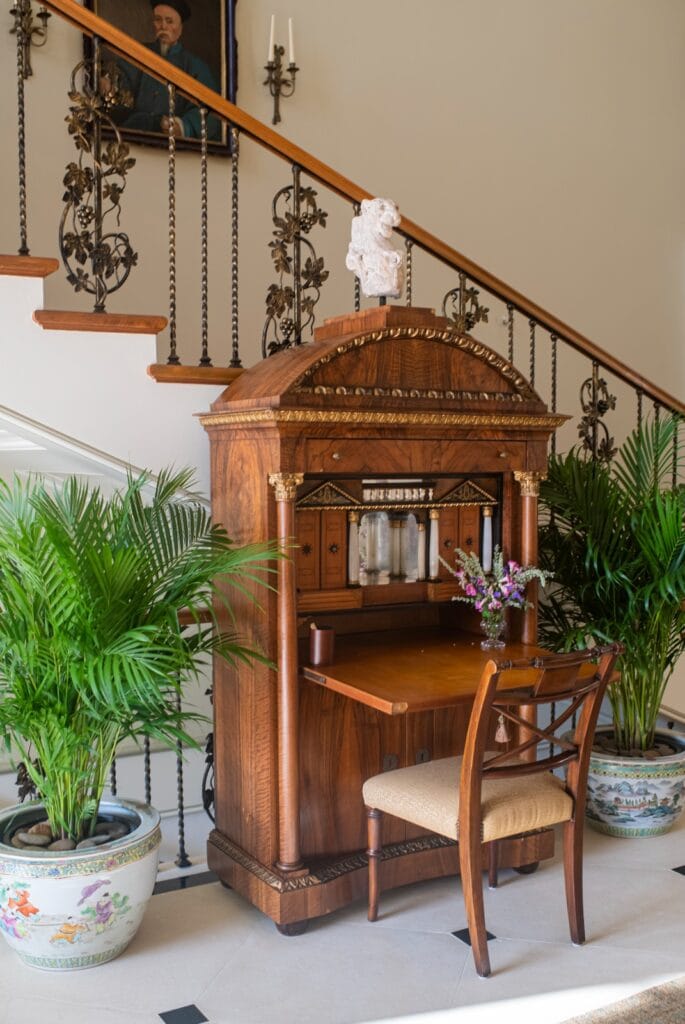
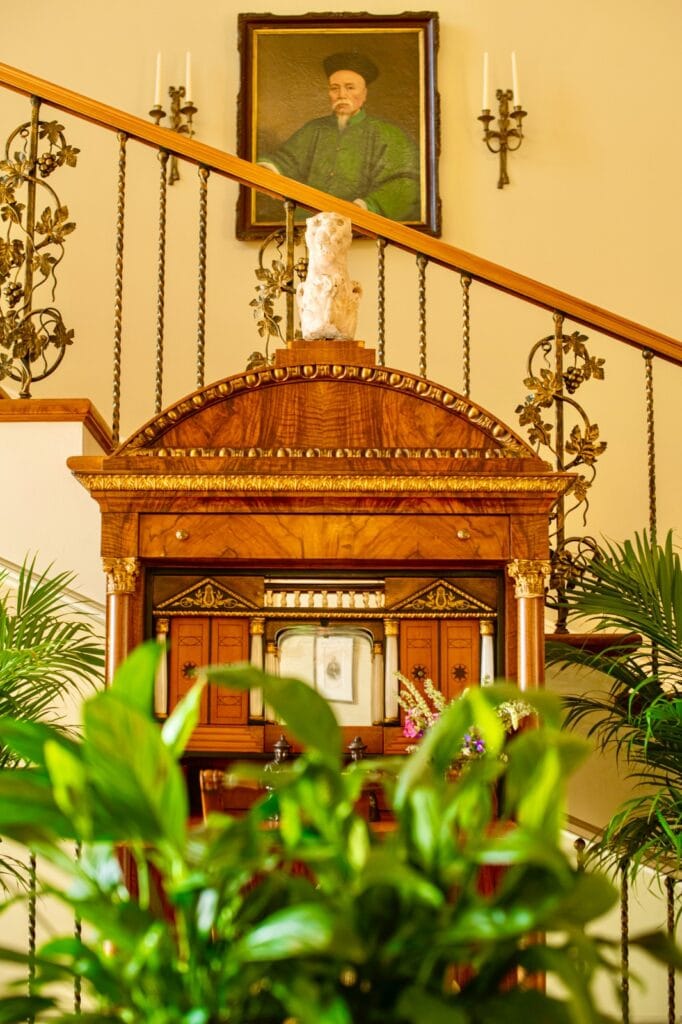
That changed the moment Mr Murjani casually mentioned that the marble lion’s head resting on a cabinet nearby was over 2,000 years old. I instinctively walked over, drawn by a quiet gravity, and stood there in disbelief… not just at its beauty, but at its endurance.
This lion’s head has witnessed the rise and fall of empires. It has survived the Roman Empire, the shifting dominance of ancient Egypt, the ascent and decline of the Ottoman Empire, and the collapse of some of the greatest kingdoms history has known. It existed during the time of Christ, present for the unfolding of one of the most pivotal eras in human history.
It endured natural disasters, wars, and centuries of upheaval… from Pompeii to two World Wars, from the Cold War to the modern age. Even if its story were turned into a book, a single volume would never suffice. It would require an entire series.
And yet, here it stands… not behind museum glass, but quietly residing in Phuket, Thailand. Far from where it was first carved, yet deeply respected, preserved, and cherished in its home.
So how did such a remarkable artifact travel across millennia and continents to arrive here?
Dating back to the 1st century BC—a period marking the transition between the late Hellenistic era and the rise of Roman influence—marble lion sculptures represent a pinnacle of ancient craftsmanship. Primarily produced in Greek workshops across Attica and Asia Minor (modern-day Turkey), these works were carved from the finest materials of the ancient world, most notably the fine-grained Pentelic marble from near Athens or the translucent Parian marble from the Cyclades.
Purpose and Symbolism
In the 1st century BC, the lion was far more than a decorative motif; it was a potent symbol of courage, strength, and divine association. These sculptures generally served three primary functions:
Elite Funerary Guardians: The most common use for full-bodied lions or prominent lion heads was as tomb guardians. Placed at the corners of burial podiums for the Greek elite, they were intended to ward off evil spirits and grave robbers while simultaneously immortalizing the bravery of the deceased.
Architectural Utility: Lion heads were frequently integrated into the “sima” (the upturned edge of a roof) of temples and civic buildings. In this role, they functioned as decorative gutters, where the open jaws served as waterspouts to direct rainwater away from the building’s foundation.
Cultic Significance: Lions were often depicted as attributes of powerful deities, such as Kybele, the Anatolian mother goddess, or Nemesis, the goddess of retribution, signifying the raw power of the divine.
Artistic Style and Realism
The aesthetic of 1st-century BC lions is characterized by a unique blend of naturalism and traditional stylization. Interestingly, many Greek artists of this period had never seen a live lion in person. Consequently, they relied on a mixture of artistic tradition and observations of domestic animals.
Canine Influence: Sculptors often modeled the facial structures on large dogs or house cats, leading to the deep-set eyes and specific snout shapes seen in surviving fragments.
Expressive Features: To convey a sense of formidable power, these sculptures featured bristled, heavy manes and wide-open jaws. The eyes were often deeply carved to create dramatic shadows, and in some high-end commissions, they were originally inlaid with colored glass to give the sculpture a lifelike, piercing gaze.
Archaeological Legacy
Today, these sculptures are frequently unearthed during systematic excavations of ancient sanctuaries, civic centers, and necropolises. While many full statues have been lost to time or repurposed for building materials in later centuries, the surviving marble heads remain vital archaeological artifacts. They provide a window into the trade routes of high-quality marble and the shared cultural values of the Mediterranean world during the 1st century BC.
For Mr Murjani, this lion’s head is more than an artifact, it is a living witness to history.
An avid and deeply knowledgeable art collector, he has spent decades seeking out pieces that most people only ever encounter in books or museums. His collection is guided not by excess, but by reverence; for craftsmanship, for history, and for the stories objects carry across time.
Naturally, I had to ask how such a rare sculpture came into his possession.
The story, much like the lion itself, did not disappoint.
If objects could speak, this lion’s head would have more stories to tell than any one lifetime could contain. Perhaps Mr Murjani said it best — an entire book, or even a film, could be made from what it has seen and heard over the last two millennia.
For now, it remains silent. Observing. Enduring. Still guarding, just as it was meant to do over 2,000 years ago.